A participant from CYL is doing a project in school on successful role models and asked if she could interview me. It was really touching and I definitely went overboard with my answers as it gave me a wonderful opportunity to reflect. I would like to share those reflections here:
1. What was your reason for going to Africa?
There were a few reasons that I decided to go to Ghana, a country situated in West Africa.
The first was based on a desire to do something about the HIV/AIDS epidemic that has swept across Africa. In my last year of high school, I did a project on the epidemic. Prior to starting the project, I had no idea about what was happening there. From that point on, I wanted to do something to help. I wanted to bring education if nothing else.
In the summer of 2006, as Co-ordinator of the Co-operative Young Leaders (CYL) Program, I shadowed a presentation given by Karen Timoshuk, an International Development Educator for the Canadian Co-operative Association (CCA). It was the presentation that I delivered at your session of CYL. Being passionate about co-operatives and the difference they make in people's lives, especially developing countries, I was very interested to learn more about CCA's Youth Experience International (YEI) Program that the video on HIV/AIDS in Ghana spoke about. In the following year, I began to read up on the YEI Program and decided that following my completion of Teacher's College at the University of Ottawa, I would apply for the six montn internship experience in Ghana as the HIV/AIDS Education Intern. Based on my experience and skill set in education and as a qualified Math teacher in particular, CCA determined that I was better suited for the position of Youth Savings Intern and worked directly with the HIV/AIDS Education Intern.
I also wanted to go to Africa because I feel that I was born into privilege and with that brings the obligation to give back. I did not choose where I was born to, it just happened. And since I have the skill set and opportunity to give back, I should.
Africa is such a vast continent that I knew very little about, aside from the horror stories you hear on the news. I wanted to see the poverty with my own eyes, take in the radiant people, and put my life into perspective. I knew that going to Ghana would be the opportunity of a lifetime and that I would learn so much about its people, about the world, about myself.
2. While in Africa, what changes did you have to get used to and how did you cope with the new lifestyle?
When I was in Ghana, there were many changes that I had to get used to: the heat, the sight of poverty everywhere I went, the Ghanaian accent, the difference in culture, being "other" and standing out. At first, it was very overwhelming everywhere I went because I wanted to take in as much as I could - the sights, the sounds, the smells. It was sensory overload. But I quickly began to settle into my life there and to adapt. There were days that were certainly easier than others.
In terms of the heat, I coped by wearing a lot of nice, flowy skirts! It made a huge difference. The harder things to deal with were the poverty, the difference in culture, and standing out. Everywhere I went, I would see people in the streets begging for money. They were dirty, sick, and often disabled. They would reach out as I passed and it was very difficult to see these people in need and not constantly give them money. But I had to walk by because I could not help every one. If I had left over food ever, I would carry it with me to give away. The difference in culture was very difficult to deal with.
The work environment in Ghana is very different than in Canada. The business world is dominated by men and if there are any young women in the organization, they are working as secretaries. Trying to get things accomplished was very challenging because I had to be very diplomatic in how I approached my supervisors. The Ghanaian culture is based on respect of elders and those in positions of authority. As a result, you are never supposed to question them or come in assertive as you would in Canada. I had to be very passive and timid in my approach. The pace at which things are accomplished is very slow. Compared to my jobs in Canada, it was painful how little got accomplished in a day. People do not exert themselves as much. Family and relationships take precedence over work. I don't completely disagree with this; in fact, I think Canadians could learn from their priorities. However, the amount of work that takes place in one week in Canada is probably equivalent to the amount of work and progress that takes place in six months in most organizations in Ghana. In order to deal with this, I had to become very apathetic and not care. This is something, as a bit of a perfectionist, that I never mastered that artfully.
The weirdest phenomenon for me that I had not really considered prior to my arrival in Ghana was that I was "other". Being a caucasian (white) female, I had never encountered that before in my life. Women in Canada hold a lot of power. We are almost equal to men, although there is still some progress to be made. And so, I have never been stared at, isolated, different. In Ghana, everywhere I went people would call out to me "Obruni" (white man). I would get stopped in the tro-tro station (where we picked up transportation) and men would tell me they loved me and ask me to be their wife. Little kids would run after me chanting "Obruni! Obruni!). I stood out. At meetings, my Ghanaian Supervisor would parade us around: "Meet our people from Canada!". It was bizarre and I mostly laughed all the time for lack of a better reaction. I kind of felt a bit like a movie star initially and eventually it got a bit annoying. But as I became more comfortable there, people could tell I had been there a while and began to leave me alone.
The hardest thing that I had to deal with, by far, while I was there was finding a man bleeding to death on the way back from lunch one day. Maya, the other Canadian intern, and I were coming back from our walk to get food and found a local alcoholic man lying in a pool of his own blood outside our workplace. As if that was not difficult enough, our co-workers seemed to think it was funny when we told them he needed help and when we learned of his death the next day. I was so angered at their reaction until I realized that they laughed because death is so commonplace and they do not grieve it the way they do here. As my time went on there, I saw many funerals. They are a celebration of life in Ghana, not a sorrowful time of mourning.
There was much to get used to, but each scenario allowed me to grow and gain a better appreciation for Ghana.
3. How did the trip change the way you live in Canada?
I would like to think that I live a less wasteful life than I did before I went to Ghana. I try to be more mindful of products I buy to ensure they are fair trade. I am less consumeristic and materialistic than I used to be; I lost a lot of weight while I was in Ghana and upon returning home, I did not rush out to buy all kinds of new clothes. I make due with what I have and I question every purchase I make. I will never be perfect because we live in a society that breeds the need for "more". We always want bigger, better. But after seeing the living conditions of people in West Africa, I have a hard time allowing myself all of the excess.
I am also more understanding of other cultures. I was fairly open-minded before, but I feel that I am even more so now. I have lived life in another's land. I was the one who had to adapt. I have a whole new appreciation for new immigrants who are trying to live their lives according to their values while adapting to a new country and set of values.
The most important thing that I have changed in my personal life is taking time with my family and friends. Ever since my return, I have tried to make trips home more often, visited with my grandparents, laughed with friends, told people how I feel about them. Work is important to me and I enjoy my job, but I used to put precedence on my job because it was something I was paid to do. Since my time in Ghana, I have realized that life is too short to always put work first. Jobs come and go, as does your working life. The people in your life are there throughout it, if you are blessed enough to have them around for the long haul.
4. Did you learn anything while in Africa?
I learned so much while in Ghana. About the world, about cultures, about myself. I learned that the way you view and deal with a situation completely changes the outcome in your mind. I learned that poverty does not equate misery. Although people have very, very little, they are so friendly, happy, and thankful to be alive. They will invite you to their home and offer you their food, even though they hardly have enough to feed themselves. I saw it all the time at work. People who had very little to eat for lunch. And yet the first thing out of a Ghanaian's mouth if they have food? "You are invited" You are invited to share their meal with them. It is truly a co-operative way of living. Entire families would sleep together on the floor in their one-roomed huts. And yet here we are in Canada with our huge homes with often one or two people living in them.
I learned that community is still vibrant and well in the world. People do not pass one another on the street withouth greeting one another. I learned to pick that up again. Who cares what the other person's reaction is? For some people, it may be the only interaction they get that day.
I learned that sometimes it is better to take a day off work to take your friend to the hospital or the clinic - what is more important: work or your friend's health and well being?
I learned that people living with HIV are just like you and me. The children who are living positive are cute, cuddly, and adorable. They did not choose this life or make a decision that affected them; they are stuck with this condition and their poor families are now doing all they can to support them.
I learned that although I sometimes get frustrated with men, the treatment of women in romantic relationships is much better in Canada than in other parts of the world. Although adultery in Canada, at least it is not well seen in society. And I do not have to worry about ever being part of a polygamous marriage, whereas in other cultures this is acceptable. That does not fit in with my value base, but I now have a better understanding and can respect people who practice it after having discussed with a young man from such a family.
I learned that I don't have to wear makeup, wear trendy clothes, do my hair all perfect to be considered beautiful.
I learned that breaking out of my North American shell and experiencing another part of the world, another culture, another lifestyle was one of the best decisions I could have ever made.
5. If you had the chance, would you go back? If so, would you go for the same reason(s) or different reason(s)?
If I had the chance, I would go back in a heartbeat. A return trip would be to visit and catch up with old friends, see what changes have been made in terms of infrastructure, access to water and health care, education, and treatment of HIV/AIDS.
If I return, I would like to go work on a building project and contribute towards the construction of a school. I would also like to volunteer with Light for Children, an organization that provides retroviral treatment, nutritional supplements, school fees, and support to children that are HIV positive and their parents or the relatives that care for them.
When I was in Ghana, I went around to secondary schools and colleges participating in the Youth Savings Clubs and educated them about the importance of beginning to save, no matter how small the amount. If these youth get a head start, they will be more successful later on because they will have money set aside to pay their school fees, pay for registration to post secondary education, pay hospital bills or to cover other unexpected but necessary costs. If I could return for a substantial amount of time, I would love to see where that program is at and assist in its delivery.
6. What do you hope people will think and feel after listening about your journey?
I hope that when people hear about my journey, it inspires them to act. Whether that be by taking a trip overseas to a developing country or by re-examining the way they live their life or by reading up more about the HIV/AIDS epidemic or Africa as a whole. We often lump all of the African countries together because we know little about them individually. I wish that more people took an interest to learn more about the countries themselves too.
I hope that people will be inspired to follow their dreams, pursue their goals.
I hope that people will try to get out of their small town or city and see the world to put some things into perspective.
It is my belief that every privileged person should venture to a developing country at some point in their life. By privileged, I do not mean rich. I am someone who went through University on student loans. I owe a huge amount of money and my parents did their best to get by, but they have a significant amount of debt to their name. But we are privileged. We can afford luxuries. I want everyone to see how people in other parts of the world live. We take for granted that when we turn on the tap, water pours out of it. Some families in the world do not even have taps. They walk far distances to obtain water. Shelter is decorated here. Some families in the world are lucky if they have four walls and a roof over their head. Some sleep in mud huts. There is such a vast difference, yet in North America, we still want more. I have a magnet on my fridge that reads "To have more, desire less". That is something that is just unheard of in most North American homes. It is my hope that people realize how fortunate they are.
7. Are you happy with what you're doing? Do you think success has anything to do with being happy?
I am very happy with what I am doing. I am currently the Education Manager at the Ontario Co-operative Association. We are the apex organization for co-operatives and credit unions in Ontario. Co-ops and credit unions are all about empowering their members and the communities they serve. They operate under a business model that is about the PEOPLE not the profit. I have seen first hand the impact that co-ops and credit unions have on people in developing countries. And I know that they greatly impact the lives of their members here as well.
Co-ops push to be innovative and sustainable and they support fair trade companies, ensuring that workers of the companies they do business with are receiving fair wages for the work they do.
Co-ops arise where there is a need and they meet that need, whether it be financial (credit unions), health oriented (health care credit unions), or otherwise.
I know that I am working for an ethical organization that supports a way of life. It is very empowering to be a part of the co-operative system.
My two passions are co-operatives and education and my job allows me to combine both of those passions in the project areas I work on.
I absolutely believe that success has everything to do with happiness. But I think that there are many different ways of looking at success as well. Success is not money. And if that's how you think, you need to re-evaluate your definition of success. Because some people who have all the money in the world are still miserable and empty. You need to determine what really makes you rich.
8. What advice would you give a grade 10 student whose planning their future?
I remember how difficult it was to determine what I wanted to do with my life. First off, do not be discouraged. Some of the happiest people I know had no clue at your age what they wanted to do. They figured it out while at University or College and changed their study path or even once they began their careers.
What do you want to be remembered for when you die? What legacy do you want to leave?
Picture yourself ten years from now. Complete picture. Where are you? What are you doing? Do you have a family? A career?
Picture yourself retired. What do you do with your days? Where do you go? Who do you spend time with?
Work backwards from these things. What do you need to do to get to that point.
If you died tomorrow, what regrets would you have? Try to live your life so that if tomorrow is your last day, you die with no regrets. Work should not be a meaningless chore for you. Choose something you are passionate about. Something that makes you smile. Something that makes you feel worthwhile. And have a good balance.
My advice to you is to take care of your body. As someone who just changed her lifestyle and now eats and exercises properly, I have noticed a huge difference in how I approach life - with a smile on my face.
Also, take care of your mind. Lose yourself in a good book. You may not have the money to take off around the world, but the more you read, the more you form opinions, the more you learn about yourself. If books aren't your thing, there are some great documentaries out there.
Always be true to yourself. Follow your hear and if you aren't happy, change things in your life.
And most of all, never give up. It can be really overwhelming to have all of these decisions in front of you. And I remember feeling like it would be disastrous if I chose the wrong thing: it won't be. I made wrong decisions, a few time, with my career path, etc.. But you learn from those events in your life. Sometimes you will even pick up on other passions.
Always treat others with Love, Dignity, and Respect. And demand nothing less. If we all lived like this, the world would be a much better place.
Thursday, September 11, 2008

Saturday, January 26, 2008
Ghanaian Reality TV: A Behind the Scenes Glance
Wednesday afternoon, I am home from work due to orders from the doctor to rest for 3 days. I had visited him on Monday due to a number of symptoms that could have been malaria. To appease Maya and to ensure it was nothing, I went and got some tests done. The results: all negative. Clearly my body just hates me! Anyways, not sure what was going on with me but after sleeping for 15 hours on Monday night/Tuesday, I felt much better. Wednesday I worked from home.
All of a sudden Kersten comes into the kitchen from her office. She tells us that she just received a call from her friend Paolos. He produces a reality tv show called People and Places that focuses on tourism in Ghana. Essentially they follow Obrunis around as they do touristy things throughout Ghana. He was looking for a couple of people to attend the Ghana vs. Namibia game the following night. The catch: they would have to be a part of the show.
So AK and I agreed to do it. Why not, a free game was involved! Paolos came to the house to meet me and that night called and asked if I could go film some stuff shortly. We went to the field where the Namibia team was scheduled to practice, but they were a no show. So we filmed it as if we showed up and their no show meant they were scared.
Next day: plans change. Of course. We will no longer be going to the game as they are saving that for the following episode. We will be going to the Fan Zone instead that night and filming some stuff around the stadium with all the merchandise. Are we still interested? Sure why not.
AK and I are picked up around 3:30pm to head to the stadium. We go and get interviewed by a DJ spinning some music. We look at some merchandise as if we're interested. I get to interview some Cameroun fans and translate their answers. Then it's off to have a beer and watch some of the Guinea vs. Morocco game before we head to the Fan Zone. Once we arrive, we are filmed walking into the Fan Park, after the goal, and as we leave at the end of the night. All in all absolute hilarity. It is fairly staged, the camera did not simply follow us throughout our experience, so that was really nice. We determined what we would say each time before we shot and then improvised from there.
We still have to record our diaries at the studio soon. When the show is complete, we were told that we would be able to get a copy. I can't wait...It's going to be hilarious.
Chow Boyyyy! (Warrior cry) Go Blackstars Go! Go Ghana Go!
All of a sudden Kersten comes into the kitchen from her office. She tells us that she just received a call from her friend Paolos. He produces a reality tv show called People and Places that focuses on tourism in Ghana. Essentially they follow Obrunis around as they do touristy things throughout Ghana. He was looking for a couple of people to attend the Ghana vs. Namibia game the following night. The catch: they would have to be a part of the show.
So AK and I agreed to do it. Why not, a free game was involved! Paolos came to the house to meet me and that night called and asked if I could go film some stuff shortly. We went to the field where the Namibia team was scheduled to practice, but they were a no show. So we filmed it as if we showed up and their no show meant they were scared.
Next day: plans change. Of course. We will no longer be going to the game as they are saving that for the following episode. We will be going to the Fan Zone instead that night and filming some stuff around the stadium with all the merchandise. Are we still interested? Sure why not.
AK and I are picked up around 3:30pm to head to the stadium. We go and get interviewed by a DJ spinning some music. We look at some merchandise as if we're interested. I get to interview some Cameroun fans and translate their answers. Then it's off to have a beer and watch some of the Guinea vs. Morocco game before we head to the Fan Zone. Once we arrive, we are filmed walking into the Fan Park, after the goal, and as we leave at the end of the night. All in all absolute hilarity. It is fairly staged, the camera did not simply follow us throughout our experience, so that was really nice. We determined what we would say each time before we shot and then improvised from there.
We still have to record our diaries at the studio soon. When the show is complete, we were told that we would be able to get a copy. I can't wait...It's going to be hilarious.
Chow Boyyyy! (Warrior cry) Go Blackstars Go! Go Ghana Go!
Saturday, January 19, 2008
A Typical Day in the Life of Ama - the Ghanaian Sonja
A friend pointed out to me that I have been good recently at uploading pictures (check out the side Pictures tab - there are a TON!) but that I have not been very good at writing stories about my time here. I therefore decided that I will make an effort to describe more about life in general here starting with a typical work day in my life in Ghana.
A Typical Work Day
*Please note times tend to vary as I enjoy sleeping until the last possible second…
6:30AM Wake up
6:35AM Soak head, add gel to control the humidity frizz!
6:45AM Breakfast (usually bread/toast & groundnut paste - similar to PB)
7:20AM Brush teeth
7:30AM Head to “bus stop” and pick a tro-tro. Depending on the morning, this can take some time because we need to wait for the first one that has space for both Maya & I. Once in the tro-tro, we pay the mate. Some days this is quick, other days we have to haggle over the price because some assume we don’t know what it is and try to charge us more.
8:00AM Arrive at Tema Station, a tro-tro station bustling with activity. There are vendors EVERYWHERE again -- see last entry about attempted clean up of Tema Station. We have to swerve around a ton of people carrying things on their heads or selling things on the floor.
These include:
- boys selling handkerchiefs
- boys selling sunglasses off large boards
- ladies selling fruit such as oranges, papayas & pineapples
- fan ice vendors which are ice cream sold in plastic bags which you tear out a corner and suck the ice cream out. Flavours are fan choco (taste like fudgesicles), fan ice (taste like Dairy cream ice cream), and fan yogo (taste like strawberry frozen yogurt)
Walk ~25 minutes to CUA House. On the way pass:
- 2-3 men with mics and loud speakers preaching (I am really going
to miss my hearing thanks to them…it’s already starting to go)
- TONS of the same vendors selling on the street as well as the same beggars
- little children dancing to music
- many MTN/other company phone card stands selling units
- newspaper stands that sport OUTRAGEOUS titles (think National Enquirer). Titles include: “Woman gives birth to fish” & “10 tips for hot sex in 2008”
- a market place
- people sleeping on the sidewalks
We cross the road 6 times and are usually running to avoid oncoming traffic (how it’s done here).
During the walk, we use our handkerchiefs repeatedly (mine are often new because I can’t seem to keep one for the life of me. I place them on my lap and lose them to the tro-tro floors or the ground when I get up). It is quite warm by 8am in Accra and humid!
8:25AM Purchase 4 pure water bags (500mL sachets of treated water sold for ~$0.05 CDN which you tear the corner out of and drink from) from the vendor right across the street from CUA House, an elderly woman who has an adorable grandson who is terrified of Maya & I.
8:30AM Walk towards CUA House and greet everyone we pass saying Good morning machee) and asking how they are (etisen) and how the night was.
Walk up the flight of stairs to CUA House and greet Jackie (Receptionist)and anyone else found in the reception area.
Get the key to our office. Greet Mama Cate & Ernest in their office, if they have actually arrived by this point.
Go to our office. Turn on light, fan, and 3 outlets. Then start up our shared computer and hope that it won’t die that day due to the viruses transmitted from USB keys used at Internet Cafés.
8:40AM Try to find enough work to sustain us through the day. Letters, memos, etc. typed up on the computer usually involve consulting one another so that neither Maya nor I die of boredom.
Greet people as they enter our office during their rounds around the office when they arrive.
1:00PM Lunch Break.
Lunch is usually one of the following:
- Fried yams & pepe (spicy salsa-like sauce)
- Rice & stew with chicken
- Banku & pepe
- Roasted plantains & ground nuts
- Red red (fried plantains served with beans)
- Occasionally we have dessert: pineapple, oranges or fan chocos
2:00PM Sometimes our friend Edmund, a former YSC member & president, will stop by our office in the afternoon. He is the brightest, most motivated young Ghanaian I have met. He is involved in the fight for children’s rights, educating and preventing child trafficking. He also has a radio program on twice weekly and works at GBC (Ghana Broadcasting Company). He will certainly be working for the UN one day.
Duties throughout the day for Maya & I include:
- making photocopies (or since only the main photocopier works most of the time, going to ask Festus - Head Administrator - to make photocopies)
- type memos requesting stationery, supplies, funds, etc.
- create the Youth Savings Programme Newsletter
- create pamphlets & handouts
- call YSC Supervisors
- get everything proofread & approved by Mama Cate & Ernest & make changes accordingly
- school visits where we address an assembly students for 5 minutes each and speak to them very briefly about the importance of saving and current HIV/AIDS prevalence rates and the need for them to change their behaviour
Sometimes there is Lights Out and the whole office shuts down for the duration and just sits around chatting or sleeping.
Many questions about life in Ghana are fielded through Archie aka Mr. Acheampong who was our main contact person at CUA prior to our arrival in Ghana. He is fabulous and if he doesn’t have the answer, he usually finds it for us quite promptly.
4:30PM Shut everything down & walk back to Tema Station to “pick” a tro-tro back to Labadi Polyclinic, which is a minute walk from our house.
Purchase fruit, water, or bread on walk to house if needed.
5:30PM Arrive home. Ring bell to be let into the Compound. Chat with roommates about our days.
6:30PM Dinner. Most often we eat out due to the fact that it is cheaper than trying to prepare it ourselves and risking left overs spoiling in the fridge if there is a power outage.
Favourites for dinner include:
- Banku with stew (next door)
- Rice & stew with meat & boiled egg (next door)
- Burgers (a five minute walk from our house)
- Tawala Beach: Rice & chicken, beer (5 minute walk)
- Eggs, toast & beans (prepared at home)
- Pasta chalked full of vegetables (prepared at home)
If we are missing North American or Continental dishes, we travel by tro-tro into Osu which takes about 10 minutes and can get Italian, Lebanese,Chinese, French, etc..
7:00PM If wireless internet is working, check email, chat, surf web. Play games(scrabble). Watch movies. Read.
9:30PM Shower. If water is out, bucket showers.
10:00PM Bedtime or retreat to bed to read, chat on MSN, or watch a movie
A Typical Work Day
*Please note times tend to vary as I enjoy sleeping until the last possible second…
6:30AM Wake up
6:35AM Soak head, add gel to control the humidity frizz!
6:45AM Breakfast (usually bread/toast & groundnut paste - similar to PB)
7:20AM Brush teeth
7:30AM Head to “bus stop” and pick a tro-tro. Depending on the morning, this can take some time because we need to wait for the first one that has space for both Maya & I. Once in the tro-tro, we pay the mate. Some days this is quick, other days we have to haggle over the price because some assume we don’t know what it is and try to charge us more.
8:00AM Arrive at Tema Station, a tro-tro station bustling with activity. There are vendors EVERYWHERE again -- see last entry about attempted clean up of Tema Station. We have to swerve around a ton of people carrying things on their heads or selling things on the floor.
These include:
- boys selling handkerchiefs
- boys selling sunglasses off large boards
- ladies selling fruit such as oranges, papayas & pineapples
- fan ice vendors which are ice cream sold in plastic bags which you tear out a corner and suck the ice cream out. Flavours are fan choco (taste like fudgesicles), fan ice (taste like Dairy cream ice cream), and fan yogo (taste like strawberry frozen yogurt)
Walk ~25 minutes to CUA House. On the way pass:
- 2-3 men with mics and loud speakers preaching (I am really going
to miss my hearing thanks to them…it’s already starting to go)
- TONS of the same vendors selling on the street as well as the same beggars
- little children dancing to music
- many MTN/other company phone card stands selling units
- newspaper stands that sport OUTRAGEOUS titles (think National Enquirer). Titles include: “Woman gives birth to fish” & “10 tips for hot sex in 2008”
- a market place
- people sleeping on the sidewalks
We cross the road 6 times and are usually running to avoid oncoming traffic (how it’s done here).
During the walk, we use our handkerchiefs repeatedly (mine are often new because I can’t seem to keep one for the life of me. I place them on my lap and lose them to the tro-tro floors or the ground when I get up). It is quite warm by 8am in Accra and humid!
8:25AM Purchase 4 pure water bags (500mL sachets of treated water sold for ~$0.05 CDN which you tear the corner out of and drink from) from the vendor right across the street from CUA House, an elderly woman who has an adorable grandson who is terrified of Maya & I.
8:30AM Walk towards CUA House and greet everyone we pass saying Good morning machee) and asking how they are (etisen) and how the night was.
Walk up the flight of stairs to CUA House and greet Jackie (Receptionist)and anyone else found in the reception area.
Get the key to our office. Greet Mama Cate & Ernest in their office, if they have actually arrived by this point.
Go to our office. Turn on light, fan, and 3 outlets. Then start up our shared computer and hope that it won’t die that day due to the viruses transmitted from USB keys used at Internet Cafés.
8:40AM Try to find enough work to sustain us through the day. Letters, memos, etc. typed up on the computer usually involve consulting one another so that neither Maya nor I die of boredom.
Greet people as they enter our office during their rounds around the office when they arrive.
1:00PM Lunch Break.
Lunch is usually one of the following:
- Fried yams & pepe (spicy salsa-like sauce)
- Rice & stew with chicken
- Banku & pepe
- Roasted plantains & ground nuts
- Red red (fried plantains served with beans)
- Occasionally we have dessert: pineapple, oranges or fan chocos
2:00PM Sometimes our friend Edmund, a former YSC member & president, will stop by our office in the afternoon. He is the brightest, most motivated young Ghanaian I have met. He is involved in the fight for children’s rights, educating and preventing child trafficking. He also has a radio program on twice weekly and works at GBC (Ghana Broadcasting Company). He will certainly be working for the UN one day.
Duties throughout the day for Maya & I include:
- making photocopies (or since only the main photocopier works most of the time, going to ask Festus - Head Administrator - to make photocopies)
- type memos requesting stationery, supplies, funds, etc.
- create the Youth Savings Programme Newsletter
- create pamphlets & handouts
- call YSC Supervisors
- get everything proofread & approved by Mama Cate & Ernest & make changes accordingly
- school visits where we address an assembly students for 5 minutes each and speak to them very briefly about the importance of saving and current HIV/AIDS prevalence rates and the need for them to change their behaviour
Sometimes there is Lights Out and the whole office shuts down for the duration and just sits around chatting or sleeping.
Many questions about life in Ghana are fielded through Archie aka Mr. Acheampong who was our main contact person at CUA prior to our arrival in Ghana. He is fabulous and if he doesn’t have the answer, he usually finds it for us quite promptly.
4:30PM Shut everything down & walk back to Tema Station to “pick” a tro-tro back to Labadi Polyclinic, which is a minute walk from our house.
Purchase fruit, water, or bread on walk to house if needed.
5:30PM Arrive home. Ring bell to be let into the Compound. Chat with roommates about our days.
6:30PM Dinner. Most often we eat out due to the fact that it is cheaper than trying to prepare it ourselves and risking left overs spoiling in the fridge if there is a power outage.
Favourites for dinner include:
- Banku with stew (next door)
- Rice & stew with meat & boiled egg (next door)
- Burgers (a five minute walk from our house)
- Tawala Beach: Rice & chicken, beer (5 minute walk)
- Eggs, toast & beans (prepared at home)
- Pasta chalked full of vegetables (prepared at home)
If we are missing North American or Continental dishes, we travel by tro-tro into Osu which takes about 10 minutes and can get Italian, Lebanese,Chinese, French, etc..
7:00PM If wireless internet is working, check email, chat, surf web. Play games(scrabble). Watch movies. Read.
9:30PM Shower. If water is out, bucket showers.
10:00PM Bedtime or retreat to bed to read, chat on MSN, or watch a movie
Saturday, December 15, 2007
CYLers Donate to Light for Children
December 10, 2007
Dear CYL Participants and Facilitators,
It is with great pleasure that I write you this update. This past weekend, I visited an organization in Kumasi, Ghana called Light for Children. Light for Children is a not-for-profit organization that provides education about HIV/AIDS as well as providing care and support for HIV positive orphans and vulnerable children.
The profits from your Co-operative Snack Shacks that you, as members, voted for me to donate to an HIV/AIDS cause in Ghana on your behalf is going to help to support one such child for a year ($630 US). I had the privilege of meeting and visiting with three children that are sponsored through Light for Children. I would like to tell you about these encounters.

The first house I visited was Justin’s. Justin is 9 years old and HIV positive. He is a HUGE football (soccer) fan and wants nothing more in the world than a Michael Essien (who plays for Ghana’s Blackstars) football jersey. With a huge smile he spoke of football and decided it would be fun to take my sunglasses off my head, put them on his face, and walk around posing. One cool dude! He was a riot. His grandmother is his caretaker because Justin is an orphan. As Mike Owusu, a Light for Children affiliate, explained, Justin is a burden to his grandmother because she already has a number of children to care for. The cost of his medication and food to ensure he gains the proper nutrition he needs to remain healthy are too expensive for her to afford. If it were not for Justin’s Light for Children sponsor, this young boy would not be receiving the medicine that will ultimately prolong his life.


The second house I visited was Kwadwo's. Kadwo (pronounced Kwajo) is 6 years old and HIV positive. He is also an orphan. His caretaker is a young woman in her early twenties. She invited us into her yard, provided us seats, and went to collect Kwadwo and his brother's report cards as well as pictures of Kwadwo's a year ago prior to his treatment. The photographs were shocking. You would never guess that a year ago this healthy, active boy was only skin and bones. He had no meat on him at all. Even his buttocks were caved in. It was so sad. Since then, he has been sponsored and his health has improved drastically. He is doing okay in school and is full of energy. It is unreal how this boy's life has turned around in the course of a year.
The third house I visited was Mabel and Mavis'. These two twin 9 year old girls are also HIV positive and orphans. As with Justin, their grandmother is their caretaker. She is a strong woman with 18 grandchildren, of whom I had the privilege of meeting about 12. They excitedly gathered around us as we handed out toffees (candy) and then they proceeded to have a dance party in their grandmother's living room. Seeing such a huge family all living in close quarters, it is evident that there is no way the grandmother could adequately provide these girls with antiretroviral drugs or proper nutrition. Without the help of their Light for Children sponsor, these two girls would not be the vibrant, healthy beings they are today.
The money that you donated from your Snack Shack profits has been donated on your behalf to Light for Children to support a child like those I have told you about above for a year. It will pay for their antiretroviral medication, proper nutrition, and for their school fees. I will soon have the details from the Founder and Executive Director of Light for Children about the child you have sponsored. Once I get it, I will send it your way. But I wanted you to know that you have offered a child a wonderful gift this holiday season: that of a healthy life.
Congratulations. You should be very proud of your donation!
For more information about Light for Children, visit www.lightforchildren.com.
Have a wonderful holiday season full of love, laughter, and cheer.
Warm Fuzzies,
Sonja Carrière
Former CYL Coordinator
Dear CYL Participants and Facilitators,
It is with great pleasure that I write you this update. This past weekend, I visited an organization in Kumasi, Ghana called Light for Children. Light for Children is a not-for-profit organization that provides education about HIV/AIDS as well as providing care and support for HIV positive orphans and vulnerable children.
The profits from your Co-operative Snack Shacks that you, as members, voted for me to donate to an HIV/AIDS cause in Ghana on your behalf is going to help to support one such child for a year ($630 US). I had the privilege of meeting and visiting with three children that are sponsored through Light for Children. I would like to tell you about these encounters.

Yaw Otchere Baffour, Executive Director of Light for Children accepts the donation brought by Sonja Carrière on behalf of the CYL Participants
The first house I visited was Justin’s. Justin is 9 years old and HIV positive. He is a HUGE football (soccer) fan and wants nothing more in the world than a Michael Essien (who plays for Ghana’s Blackstars) football jersey. With a huge smile he spoke of football and decided it would be fun to take my sunglasses off my head, put them on his face, and walk around posing. One cool dude! He was a riot. His grandmother is his caretaker because Justin is an orphan. As Mike Owusu, a Light for Children affiliate, explained, Justin is a burden to his grandmother because she already has a number of children to care for. The cost of his medication and food to ensure he gains the proper nutrition he needs to remain healthy are too expensive for her to afford. If it were not for Justin’s Light for Children sponsor, this young boy would not be receiving the medicine that will ultimately prolong his life.


Left: Justin wearing my shades
Right: Justin and some friends making sure they're in the picture!
The second house I visited was Kwadwo's. Kadwo (pronounced Kwajo) is 6 years old and HIV positive. He is also an orphan. His caretaker is a young woman in her early twenties. She invited us into her yard, provided us seats, and went to collect Kwadwo and his brother's report cards as well as pictures of Kwadwo's a year ago prior to his treatment. The photographs were shocking. You would never guess that a year ago this healthy, active boy was only skin and bones. He had no meat on him at all. Even his buttocks were caved in. It was so sad. Since then, he has been sponsored and his health has improved drastically. He is doing okay in school and is full of energy. It is unreal how this boy's life has turned around in the course of a year.
The third house I visited was Mabel and Mavis'. These two twin 9 year old girls are also HIV positive and orphans. As with Justin, their grandmother is their caretaker. She is a strong woman with 18 grandchildren, of whom I had the privilege of meeting about 12. They excitedly gathered around us as we handed out toffees (candy) and then they proceeded to have a dance party in their grandmother's living room. Seeing such a huge family all living in close quarters, it is evident that there is no way the grandmother could adequately provide these girls with antiretroviral drugs or proper nutrition. Without the help of their Light for Children sponsor, these two girls would not be the vibrant, healthy beings they are today.
The money that you donated from your Snack Shack profits has been donated on your behalf to Light for Children to support a child like those I have told you about above for a year. It will pay for their antiretroviral medication, proper nutrition, and for their school fees. I will soon have the details from the Founder and Executive Director of Light for Children about the child you have sponsored. Once I get it, I will send it your way. But I wanted you to know that you have offered a child a wonderful gift this holiday season: that of a healthy life.
Congratulations. You should be very proud of your donation!
For more information about Light for Children, visit www.lightforchildren.com.
Have a wonderful holiday season full of love, laughter, and cheer.
Warm Fuzzies,
Sonja Carrière
Former CYL Coordinator
Sunday, December 2, 2007
How Sports Can Bring a Nation Together
Football, also known as soccer in North America, seems to be the world's sport. Only North America, Australia, and New Zealand have yet to jump on the football fever band wagon. As an ice hockey enthusiast in Canada, I find myself deprived of the exhiliration, camaraderie, and competition that takes over when the hockey season begins. With the warm weather in Ghana and absence of ice, I have decided that I may as well embrace the local sport and fill the sports void in my life.
With the African Nations Cup coming to Ghana in January 2008, there is not a better time to become familiar with this sport! So far, I have been fortunate enough to see a few games on television, but even with the Ghanaians shouting every goal or near goal, nothing compares to the Four Nations Cup game that I got to attend.
November 18th at 5pm, Ghana took on Togo in the tournament. A group of friends bought tickets to attend the event. Tickets were 5 Ghana cedis for the upper deck (roughly 6 Canadian dollars), 10 Ghana cedis for the lower deck, or 50 Ghana cedis for the VIP seats which included entry into the locker rooms to mingle with Ghana's Black Stars players. We opted for the lower deck seats and could not believe how close we were! In row G, we found ourselves 7 rows from the field. Little did we know that the glass protecting fans from the ball would be so difficult to see through with the sun shining! We quickly learned that the seats would not fill up and moved a little higher so that we could see above the glass.
The atmosphere in the stadium was incredible. Ghana colours were proudly displayed in the form of jerseys, flags, hats, body paint, etc.. Fans were chanting the soccer theme with pride and enthusiasm. As I know little about the sport, I learned quickly by following the sounds in the stands when there was a goal, when there was a near miss, and when the crowd were dissatisfied with the referee's call. Ghana's team was evidently superior to Togo's and won the game easily with 2 goals to none.
They went on a few nights later to defeat Benin for first place in the tournament with a 4-0 win. We were staying in a guest house since we were travelling for work and I managed to catch the end of the game with the staff of the guest house. I could certainly sympathize with the zest and enlightenment that accompanied their team's win as I experienced when my team, the Ottawa Senators, made it to the Stanley Cup Finals the previous season. This small tournament gave me a glimpse into what Ghana will be like during the African Cup of Nations. It made me realize that sports worldwide share the same phenomenon: the fans want something to believe in and want to be a part of celebrating a win. What could be more satisfying than that? I cannot wait to see how Ghana does and will certainly be among those decked out in red, yellow, and green. Hopefully celebrating in the streets at the tournaments' end.
With the African Nations Cup coming to Ghana in January 2008, there is not a better time to become familiar with this sport! So far, I have been fortunate enough to see a few games on television, but even with the Ghanaians shouting every goal or near goal, nothing compares to the Four Nations Cup game that I got to attend.
November 18th at 5pm, Ghana took on Togo in the tournament. A group of friends bought tickets to attend the event. Tickets were 5 Ghana cedis for the upper deck (roughly 6 Canadian dollars), 10 Ghana cedis for the lower deck, or 50 Ghana cedis for the VIP seats which included entry into the locker rooms to mingle with Ghana's Black Stars players. We opted for the lower deck seats and could not believe how close we were! In row G, we found ourselves 7 rows from the field. Little did we know that the glass protecting fans from the ball would be so difficult to see through with the sun shining! We quickly learned that the seats would not fill up and moved a little higher so that we could see above the glass.
The atmosphere in the stadium was incredible. Ghana colours were proudly displayed in the form of jerseys, flags, hats, body paint, etc.. Fans were chanting the soccer theme with pride and enthusiasm. As I know little about the sport, I learned quickly by following the sounds in the stands when there was a goal, when there was a near miss, and when the crowd were dissatisfied with the referee's call. Ghana's team was evidently superior to Togo's and won the game easily with 2 goals to none.
They went on a few nights later to defeat Benin for first place in the tournament with a 4-0 win. We were staying in a guest house since we were travelling for work and I managed to catch the end of the game with the staff of the guest house. I could certainly sympathize with the zest and enlightenment that accompanied their team's win as I experienced when my team, the Ottawa Senators, made it to the Stanley Cup Finals the previous season. This small tournament gave me a glimpse into what Ghana will be like during the African Cup of Nations. It made me realize that sports worldwide share the same phenomenon: the fans want something to believe in and want to be a part of celebrating a win. What could be more satisfying than that? I cannot wait to see how Ghana does and will certainly be among those decked out in red, yellow, and green. Hopefully celebrating in the streets at the tournaments' end.
Student Empowerment: Successes of Youth Savings Clubs in Ghanaian Schools
Since 1999, the Ghana Co-operative Credit Union Association (CUA) Ltd. has hosted a Youth Savings Programme with the goal of "inculcating the habit of savings into the youth". The credit unions' apex organization saw the need to educate youth about saving, and the credit union system as a whole, to ensure a succession plan was in place for the credit union sector.
CUA Management also saw the need to educate their members and the youth in the credit unions' communities about healthy living so that members were strong and healthy enough to enjoy their savings. They therefore began HIV/AIDS awareness sessions that both educated members and youth alike on this and other sexually transmitted diseases. This education grew to include peer education and awareness training on stigma and discrimination as well as the need for behaviour change to reduce the increasing prevalence rate of HIV/AIDS in Ghana.
This past month, November 2007, the Youth Savings and HIV/AIDS Department at CUA has been to several of the countries' regions to speak to secondary students about the importance of saving and about current prevalence rates of HIV/AIDS in Ghana and the need to change their behaviour towards this and other STIs as well as towards those living with HIV/AIDS. Each presentation has followed the same format: Ms. Gabianu, the HIV/AIDS Education Co-ordinator at CUA, gives a brief history about the Youth Savings Programme and touches briefly on the reason CUA felt the need to put the programme into place; then I, the Youth Savings Intern, speak about the importance of practicing the habit of savings; finally, Maya Nakajima, the HIV/AIDS Education Intern, gives the students current statistics about the increasing prevelance rate of HIV/AIDS (from 2.7% in 2005 to 3.2% in 2006) in Ghana and the fact that youth aged 15-24 years make up 30% of those infected and those under 35 years of age make up 88%.
Each of our talks seem to be received with great enthusiasm on the part of the students. They cheer when we say our names, which to them are very exotic. They also cheer loudly when we incorporate Twi, the local language, into the presentation. It is all very exciting for the students as well as for us since we are so well received, but for me the most exciting part about these visits is learning about the students who have really made an effort to save the little that they do not need to get by in their day to day lives and have truly made a difference for themselves.
These student success stories come in various forms. There are those who have managed to pay their school fees and eliminated the need for administration to send them home to fetch it from their parents. There are those who have saved up enough to start up a small business during or after their secondary schooling. There are those who have paid for admission forms to post secondary institutions to continue their education. And then there are the few rare cases where students went above and beyond, either due to circumstance or due to a keen eye for a great opportunity.
The beauty of this programme is that it helps students to prepare for the future while putting ownership on them that the future is theirs and no one else's responsibility. In my speech to students about the importance of saving, I tell them about one of the students who used his saving to support his family in an unfortunate circumstance. One day, this student's family home burned to the ground. They had absolutely nothing left, no funds, nothing. It is very different here in Ghana than in North America. People often do not have enough income to warrant depositing their money in the bank or a credit union. Unfortunately, it is not a choice they make as they do not have the minimum savings required to maintain an open bank account. Therefore this family found themselves without any lodging, food, or money. The student used his personal savings to support his family for a week until they could figure things out. Had he not been a part of the youth savings programme, things may have been much more dismal for his family.
Another student set her mother up for success by using her savings to purchase a deep freezer for her. With this deep freezer, her mother managed to start up a small business and therefore generated enough income to pay her daughter's and other children's school fees.
There are many headmasters, headmistresses, teachers, and even students who are skeptical about the Youth Savings Clubs (YSCs) operating within 37 of Ghana's secondary schools and training colleges. They do not understand how individuals who can barely support themselves as it is can manage to save. But by putting away a tiny fraction of their pocket, lunch, or transportation money that they can manage to forget about and do without, students in Ghana are setting up a slush fund for themselves and creating a brighter future while learning about budgeting.
CUA Management also saw the need to educate their members and the youth in the credit unions' communities about healthy living so that members were strong and healthy enough to enjoy their savings. They therefore began HIV/AIDS awareness sessions that both educated members and youth alike on this and other sexually transmitted diseases. This education grew to include peer education and awareness training on stigma and discrimination as well as the need for behaviour change to reduce the increasing prevalence rate of HIV/AIDS in Ghana.
This past month, November 2007, the Youth Savings and HIV/AIDS Department at CUA has been to several of the countries' regions to speak to secondary students about the importance of saving and about current prevalence rates of HIV/AIDS in Ghana and the need to change their behaviour towards this and other STIs as well as towards those living with HIV/AIDS. Each presentation has followed the same format: Ms. Gabianu, the HIV/AIDS Education Co-ordinator at CUA, gives a brief history about the Youth Savings Programme and touches briefly on the reason CUA felt the need to put the programme into place; then I, the Youth Savings Intern, speak about the importance of practicing the habit of savings; finally, Maya Nakajima, the HIV/AIDS Education Intern, gives the students current statistics about the increasing prevelance rate of HIV/AIDS (from 2.7% in 2005 to 3.2% in 2006) in Ghana and the fact that youth aged 15-24 years make up 30% of those infected and those under 35 years of age make up 88%.
Each of our talks seem to be received with great enthusiasm on the part of the students. They cheer when we say our names, which to them are very exotic. They also cheer loudly when we incorporate Twi, the local language, into the presentation. It is all very exciting for the students as well as for us since we are so well received, but for me the most exciting part about these visits is learning about the students who have really made an effort to save the little that they do not need to get by in their day to day lives and have truly made a difference for themselves.
These student success stories come in various forms. There are those who have managed to pay their school fees and eliminated the need for administration to send them home to fetch it from their parents. There are those who have saved up enough to start up a small business during or after their secondary schooling. There are those who have paid for admission forms to post secondary institutions to continue their education. And then there are the few rare cases where students went above and beyond, either due to circumstance or due to a keen eye for a great opportunity.
The beauty of this programme is that it helps students to prepare for the future while putting ownership on them that the future is theirs and no one else's responsibility. In my speech to students about the importance of saving, I tell them about one of the students who used his saving to support his family in an unfortunate circumstance. One day, this student's family home burned to the ground. They had absolutely nothing left, no funds, nothing. It is very different here in Ghana than in North America. People often do not have enough income to warrant depositing their money in the bank or a credit union. Unfortunately, it is not a choice they make as they do not have the minimum savings required to maintain an open bank account. Therefore this family found themselves without any lodging, food, or money. The student used his personal savings to support his family for a week until they could figure things out. Had he not been a part of the youth savings programme, things may have been much more dismal for his family.
Another student set her mother up for success by using her savings to purchase a deep freezer for her. With this deep freezer, her mother managed to start up a small business and therefore generated enough income to pay her daughter's and other children's school fees.
There are many headmasters, headmistresses, teachers, and even students who are skeptical about the Youth Savings Clubs (YSCs) operating within 37 of Ghana's secondary schools and training colleges. They do not understand how individuals who can barely support themselves as it is can manage to save. But by putting away a tiny fraction of their pocket, lunch, or transportation money that they can manage to forget about and do without, students in Ghana are setting up a slush fund for themselves and creating a brighter future while learning about budgeting.
Thursday, November 1, 2007
The New Tema Station, Brought to You by Raid
Every country has its problem areas in terms of poverty and so called "eye sores" in its cities. I guess when I first arrived at Tema Station in Accra, Ghana - the main station where tro-tros (rundown mini-buses) convene - I never considered it to be problematic. Yes, I will admit the hustle and bustle of the tro-tros, vendors, and pedestrians was a little overwhelming at first with people crying out the prices of their merchandise and trying to get the attention of people as they walked by, especially us Obrunis (caucasians). However, visiting the market or driving through the streets of Accra, you would encounter the same kinds of activity. People everywhere here are struggling to get by and are making their ends meet by selling their merchandise whereever and however they can.
After living in Accra for a couple of months, I was really beginning to enjoy the charm of Tema Station. It has a certain rhythm about it. Any day to day item you need can be found there and Maya, my roommate, and I would often pick up our produce for dinner there on our way home. Day after day we would see the same women and men as we passed through the station on our way to or from work. Faces became familiar and we befriended a couple of the vendors where we purchased shoes or produce.
For many of the women, men, and children in Tema Station, it was not only the location of their business, but often their home as well. Small sheds were set up and adorned with their merchandise and with no other place to go, some people spent their entire days and nights there. You can see them sleeping in the day's heat or eating their dinners as you pass by on the way to your cozy home or dinner. It really is remarkable to see people so chipper every day when you know that they are faced with such poverty. It really puts things in your life into perspective.
About a week and a half ago, the Tema Station I had grown so accustomed to underwent major changes. One afternoon on our way home from work, we noticed that they had begun to tear down some of the sheds. Utterly confused, Maya and I speculated that maybe it had something to do with the looming rain. The next morning when our tro-tro pulled into the station we realized that we were terribly wrong. The strong smell of smoke stung our nostrils and we glanced out the tro-tro window in shock and disbelief at the rubble and garbage that was the only remaining evidence of the vivacity that had previously occupied Tema Station. It was overwhelmingly disheartening. I walked through the station absolutely numb at the thought of all of those people who had nowhere to go. How do you take everything you have and just start over in the streets? As if life is not difficult enough as it is.
I soon learned from a friend that the motives behind the 'clean-up' were to make a cleaner Accra. However, there is some speculation that it has something to do with the upcoming 2008 African Nations Cup that is being hosted in Ghana or the 2008 Presidential Election. Whatever the true motivations, it makes me really sad to see so many people at a loss of their home, their business, and, for some, their merchandise. I cannot even begin to fathom the challenges these brave people face with pride and dignity every day of their lives. And now the government poses another barrier for them without providing them with an alternative place to go. One can only speculate that as a result of this action, crime rates will go up and more lives will be lost due to a lack of basic provisions.
Ghana is not alone in sweeping their problems under the rug so that the world does not see it. After talking to friends, I learned that Vancouver is doing a similar clean-up for the 2010 Olympics. It is happening right in our Canadian backyard. And the worst part? The way only a positive light is shed on these endeavours. They are not providing people with a way to end their troubles, they are adding to them and yet claiming it to be a good thing. And right outside Tema Station now hangs a sign that's revolting underlying message says it all about the mentality behind this sweep: The New Tema Station, brought to you by Raid.
After living in Accra for a couple of months, I was really beginning to enjoy the charm of Tema Station. It has a certain rhythm about it. Any day to day item you need can be found there and Maya, my roommate, and I would often pick up our produce for dinner there on our way home. Day after day we would see the same women and men as we passed through the station on our way to or from work. Faces became familiar and we befriended a couple of the vendors where we purchased shoes or produce.
For many of the women, men, and children in Tema Station, it was not only the location of their business, but often their home as well. Small sheds were set up and adorned with their merchandise and with no other place to go, some people spent their entire days and nights there. You can see them sleeping in the day's heat or eating their dinners as you pass by on the way to your cozy home or dinner. It really is remarkable to see people so chipper every day when you know that they are faced with such poverty. It really puts things in your life into perspective.
About a week and a half ago, the Tema Station I had grown so accustomed to underwent major changes. One afternoon on our way home from work, we noticed that they had begun to tear down some of the sheds. Utterly confused, Maya and I speculated that maybe it had something to do with the looming rain. The next morning when our tro-tro pulled into the station we realized that we were terribly wrong. The strong smell of smoke stung our nostrils and we glanced out the tro-tro window in shock and disbelief at the rubble and garbage that was the only remaining evidence of the vivacity that had previously occupied Tema Station. It was overwhelmingly disheartening. I walked through the station absolutely numb at the thought of all of those people who had nowhere to go. How do you take everything you have and just start over in the streets? As if life is not difficult enough as it is.
I soon learned from a friend that the motives behind the 'clean-up' were to make a cleaner Accra. However, there is some speculation that it has something to do with the upcoming 2008 African Nations Cup that is being hosted in Ghana or the 2008 Presidential Election. Whatever the true motivations, it makes me really sad to see so many people at a loss of their home, their business, and, for some, their merchandise. I cannot even begin to fathom the challenges these brave people face with pride and dignity every day of their lives. And now the government poses another barrier for them without providing them with an alternative place to go. One can only speculate that as a result of this action, crime rates will go up and more lives will be lost due to a lack of basic provisions.
Ghana is not alone in sweeping their problems under the rug so that the world does not see it. After talking to friends, I learned that Vancouver is doing a similar clean-up for the 2010 Olympics. It is happening right in our Canadian backyard. And the worst part? The way only a positive light is shed on these endeavours. They are not providing people with a way to end their troubles, they are adding to them and yet claiming it to be a good thing. And right outside Tema Station now hangs a sign that's revolting underlying message says it all about the mentality behind this sweep: The New Tema Station, brought to you by Raid.
There`s No Hallowe'en in Ghana But Dressing Up Still Happens in October
One bright October morning, my colleagues and I travelled to a school to address the new students and educate them about the Youth Savings Club in their school. We arrived at the school and asked to speak to the Teacher Supervisor of the club. Unfortunately, according to her colleagues, she had not yet arrived. So we began to walk around in search of her or a member of the Youth Savings Club that could point us in the right direction.
There was a lot of commotion and chanting in the school, and as we turned a corner in the corridor there was a large group of students all crossdressing! It was very surprising to me as homosexuality is very frowned upon and illegal in Ghana. Students had smiles plastered on their faces and they were singing, dancing, and chanting through the school in large groups. At one point, a man dressed as a school boy ran by us followed by students. We came to learn that he is the headmaster of the school.
We were pointed in the direction of the auditorium where the addresses to first years were being held. We arrived just as the addresses were wrapping up to find the Teacher Supervisor, Abena, sitting at the back of the auditorium. Such is life sometimes in Ghana. Things do not always go according to plan and you need to be really flexible. We therefore took the opportunity to go converse with her in the staff room so that we could learn more about their school's Youth Savings Club and its successes and challenges.
During our time in the staff room, one of the male teachers came in all dolled up and pulling off a very convincing woman - high voice and all. There were many laughs shared amongst staff members. It turns out that the school was celebrating its Silver Jubilee and that was the launch of two weeks worth of celebrations to mark the event.
It was nice to see that both students and teachers alike are open to experimentation for the sake of celebrating such an important event in their school's history. The joy was infectuous and I can still see and hear them chanting their school's success.
There was a lot of commotion and chanting in the school, and as we turned a corner in the corridor there was a large group of students all crossdressing! It was very surprising to me as homosexuality is very frowned upon and illegal in Ghana. Students had smiles plastered on their faces and they were singing, dancing, and chanting through the school in large groups. At one point, a man dressed as a school boy ran by us followed by students. We came to learn that he is the headmaster of the school.
We were pointed in the direction of the auditorium where the addresses to first years were being held. We arrived just as the addresses were wrapping up to find the Teacher Supervisor, Abena, sitting at the back of the auditorium. Such is life sometimes in Ghana. Things do not always go according to plan and you need to be really flexible. We therefore took the opportunity to go converse with her in the staff room so that we could learn more about their school's Youth Savings Club and its successes and challenges.
During our time in the staff room, one of the male teachers came in all dolled up and pulling off a very convincing woman - high voice and all. There were many laughs shared amongst staff members. It turns out that the school was celebrating its Silver Jubilee and that was the launch of two weeks worth of celebrations to mark the event.
It was nice to see that both students and teachers alike are open to experimentation for the sake of celebrating such an important event in their school's history. The joy was infectuous and I can still see and hear them chanting their school's success.
Tuesday, October 30, 2007
Exploring the Volta Region
Wanting to see more of this beautiful country, Maya and I requested this past Friday and Monday off to be able to travel 4 hours away to Hohoe which is found in the Volta Region (along east side of Ghana about 1/3 - 1/2 way up the country). Hohoe itself does not really have much to offer in terms of tourist attractions, but luckily for us we picked the right weekend and a festival was being held there. Traditionally two villages - Peky and Hohoe - were merged together. Sometime in the past they separated, but every year one of the two villages hosts a festival to celebrate their origins together. During the festival, accommodations are sporadically found when people from Peky just walk up to a house in Hohoe, say they are from Peky, and are invited in with open arms. It’s incredible how inviting Ghanaians are.
We departed from Accra by tro-tro at about 10am on Friday morning with Niv and Jason, two of the volunteers from the October group. Ann-Kristin met us there on Friday night. We stayed at the Grand Hotel in town which proved to be quite nice contrary to the impression I received from the Bradt Guide that we consulted. Stephen, the local Credit Union Manager had booked us a room when he visited CUA House after comparing prices. We had some lunch, met with Stephen, and then retreated to our room since it had begun to poor rain. A bunch of rounds of Texas Hold Em and Euchre later, we were ready for dinner and were afterwards joined by Ann-Kristin. Because of weather, we went back to our rooms, played some cards, and just chatted until bed.
Mount Afadjato
The following day after breakfast, we took off for Mt. Afadjato which is supposedly the highest point in Ghana at 885m above sea level (we were later told at another site that it is the highest measured point). We began the hike and I quickly realized that breathing was going to be an issue between the humid weather and the quick steep ascend that the guide was leading. Niv & I decided that we did not want to hold the our three, much more fit, friends back and so ushered them to continue on and we would go at our own pace. When it started to rain, we turned back slightly grateful. I need to get in shape! We walked back in the pouring rain to the visitor’s centre and I went to the bathhouse and wrung out my clothing during a lull in the rain. The other three returned about an hour later absolutely drenched and muddy after trudging back down.
Village Celebrations
We had planned to proceed from there to Wli Waterfalls, the largest waterfalls in Ghana, but due to the weather, we decided to simply return to Hohoe and to push our visit to the Falls back. En route to our hotel, we saw a large gathering in town where chiefs were all dressed up and adorned in gold and beautiful cloth and there was much chanting and singing. After grabbing lunch at a small chop bar (the Ghanaian equivalent of a fast food joint), we went to join in the festivities. It was incredible to see the singing, dancing, and overall joyous festivities. From the square, people began to clear out into the streets leading to two separate celebrations: one for Hohoe and one for Peky. Not sure what was going on, we followed one of the processions and inquired as to if it was appropriate for us to partake in the festivities and were warmly invited into Peky’s celebrations. In amidst the houses in part of the village, there was a group of men playing instruments and watching as solos took place to the music in the middle. These solos included dancing and acting out scenes with machetes and knives which they sometime used on their own skins. It was terrifying and intriguing to watch. They did not cut themselves but used quite firm cutting motions. I am still unsure as to how they managed to do it. We were seated behind the women who are married to the Chiefs of the village. Across the ‘street’ were the Chiefs. All of the Chiefs and their families were adorned in flashy jewellery and expensive cloth. One of the women sitting in the front row was an American and we were quite curious as to how she obtained her status. Turns out she just happened to be friends of one of the Chiefs and visiting.
Wli Waterfall and Likpe Todome Caves
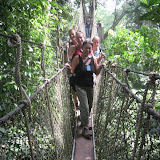
Sunday morning we departed for the Waterfall. We took a taxi to Wli and then it was a 45 minute walk through the jungle with 9 footbridges. It was a beautiful walk that we shared with a couple from Denmark and their two young children, their driver, the guide, and our taxi driver. We learned this weekend that it is quite customary for the taxi driver to accompany you on your travel at no cost to them or you. Once at the waterfall, there was a changing room where we changed into shorts and tank tops. We headed to the pool and the base of the falls and had a nice, refreshing swim. It was incredible. The pool was surprisingly not deep. We even swam through the falls and touched the wall behind it! Just an exhilarating experience.


From there we took off to Likpe Todome where there is a network of 6 caves and a nearby waterfall. Little did we know that it was going to be at the top of a ‘mountain’ higher than Afadjato. After arguing over the price with the visitor centre guy (we read at both previously visited site that it was 3.50 Ghana cedis and he tried to charge us 4.50 with a big. goofy grin on his face that gave him away), and then over the taxi ride price for the day, which had already been agreed upon, we departed for the caves in somewhat of a bitter mood. That is also something that is common in Ghana. The Ghanaians see our white skin and assume that we have no idea how much things are and try to gauge you. This is extremely frustrating when you find yourself in a situation where you don’t have many other options. But may I note that I, with a very calm speech and by biting my tongue, managed to get them back to the real price. Niv told me she was impressed. Back to the caves, at the speed which they were going, I was feeling pretty tired but nothing unmanageable, but poor Niv was having a tough time. Not wanting her to get sick and knowing from the previous day how she must feel, I urged the others to continue on and Niv and I agreed that we would continue at a slower pace. Frank, the second guide, remained with us and carried her backpack. About half way up, she couldn’t do it anymore, so we decided to start back down and to go see the waterfall nearby. I was somewhat disappointed, but after talking to the others and realizing that the caves were essentially rock climbing without a harness, I was relieved that we got to see the waterfall instead. Also a beautiful sight , it was more secluded reached by a small footpath through a stream and the thick, luscious foliage of the jungle. It was neat to still be able to hear about the caves and see pictures without having to be in the “one wrong move and you’re dead” situation. We went home that night, Ann-Kristin (A.K.) went to grab the tro-tro back to Accra, and the rest of us ate dinner and went to bed pretty early so that we could get up early the next morning for the last adventure of our trip.
Tafi Atome Monkey Sanctuary
Although I was the one adamant on getting up at 5am to ensure we did not miss the cute, furry little creatures that we were going to visit at the Monkey Sanctuary, that dreadful hour in the morning came way to early. Niv opted out of attending having convinced herself that she would definitely be seeing monkeys at some other point in her remaining two months in Ghana or during her following camping escapades through South Africa. So the Maya, Jason, and I headed out to grab a tro-tro. Since you have to wait for the tro-tros to fill up before they will leave, we were not on the road until 6:30am. We still arrived at the junction (turn off) for Tafi Atome before 7am and sat on the back of a flatbed truck down the 5km road to the village. Our guide took us to get bananas and made a kissing noise in the direction of the bush and we were off. Two minutes into our walk into the jungle, we could hear the Chief of the Monkeys - Commando - answering the kissing noises made by our guide. When we turned deeper in it was a short time until he showed himself. From his size, it is no wonder that he is the chief of the monkeys. Mona monkeys are pretty small and he was about twice the size of most of them. They were swinging in the trees like crazy coming closer in the hopes of getting some of the bananas we brought. We each had the chance to feed them. It was absolutely incredible. I have a new goal to go see monkeys as much as I can while I am here!


All in all it was a wonderful weekend. We had a rather uneventful trip home aside from having to get out at a Customs Checkpoint and explain why none of us had our passports on us. It was no big deal and they let us go pretty quickly but it became pretty clear that the only reason we were stopped was because they saw us on the tro-tro.
We departed from Accra by tro-tro at about 10am on Friday morning with Niv and Jason, two of the volunteers from the October group. Ann-Kristin met us there on Friday night. We stayed at the Grand Hotel in town which proved to be quite nice contrary to the impression I received from the Bradt Guide that we consulted. Stephen, the local Credit Union Manager had booked us a room when he visited CUA House after comparing prices. We had some lunch, met with Stephen, and then retreated to our room since it had begun to poor rain. A bunch of rounds of Texas Hold Em and Euchre later, we were ready for dinner and were afterwards joined by Ann-Kristin. Because of weather, we went back to our rooms, played some cards, and just chatted until bed.
Mount Afadjato
The following day after breakfast, we took off for Mt. Afadjato which is supposedly the highest point in Ghana at 885m above sea level (we were later told at another site that it is the highest measured point). We began the hike and I quickly realized that breathing was going to be an issue between the humid weather and the quick steep ascend that the guide was leading. Niv & I decided that we did not want to hold the our three, much more fit, friends back and so ushered them to continue on and we would go at our own pace. When it started to rain, we turned back slightly grateful. I need to get in shape! We walked back in the pouring rain to the visitor’s centre and I went to the bathhouse and wrung out my clothing during a lull in the rain. The other three returned about an hour later absolutely drenched and muddy after trudging back down.
Village Celebrations
We had planned to proceed from there to Wli Waterfalls, the largest waterfalls in Ghana, but due to the weather, we decided to simply return to Hohoe and to push our visit to the Falls back. En route to our hotel, we saw a large gathering in town where chiefs were all dressed up and adorned in gold and beautiful cloth and there was much chanting and singing. After grabbing lunch at a small chop bar (the Ghanaian equivalent of a fast food joint), we went to join in the festivities. It was incredible to see the singing, dancing, and overall joyous festivities. From the square, people began to clear out into the streets leading to two separate celebrations: one for Hohoe and one for Peky. Not sure what was going on, we followed one of the processions and inquired as to if it was appropriate for us to partake in the festivities and were warmly invited into Peky’s celebrations. In amidst the houses in part of the village, there was a group of men playing instruments and watching as solos took place to the music in the middle. These solos included dancing and acting out scenes with machetes and knives which they sometime used on their own skins. It was terrifying and intriguing to watch. They did not cut themselves but used quite firm cutting motions. I am still unsure as to how they managed to do it. We were seated behind the women who are married to the Chiefs of the village. Across the ‘street’ were the Chiefs. All of the Chiefs and their families were adorned in flashy jewellery and expensive cloth. One of the women sitting in the front row was an American and we were quite curious as to how she obtained her status. Turns out she just happened to be friends of one of the Chiefs and visiting.
Wli Waterfall and Likpe Todome Caves
Sunday morning we departed for the Waterfall. We took a taxi to Wli and then it was a 45 minute walk through the jungle with 9 footbridges. It was a beautiful walk that we shared with a couple from Denmark and their two young children, their driver, the guide, and our taxi driver. We learned this weekend that it is quite customary for the taxi driver to accompany you on your travel at no cost to them or you. Once at the waterfall, there was a changing room where we changed into shorts and tank tops. We headed to the pool and the base of the falls and had a nice, refreshing swim. It was incredible. The pool was surprisingly not deep. We even swam through the falls and touched the wall behind it! Just an exhilarating experience.


Left: Wli Waterfall
Right: Me standing in the pool at the base of the Falls after our swim
From there we took off to Likpe Todome where there is a network of 6 caves and a nearby waterfall. Little did we know that it was going to be at the top of a ‘mountain’ higher than Afadjato. After arguing over the price with the visitor centre guy (we read at both previously visited site that it was 3.50 Ghana cedis and he tried to charge us 4.50 with a big. goofy grin on his face that gave him away), and then over the taxi ride price for the day, which had already been agreed upon, we departed for the caves in somewhat of a bitter mood. That is also something that is common in Ghana. The Ghanaians see our white skin and assume that we have no idea how much things are and try to gauge you. This is extremely frustrating when you find yourself in a situation where you don’t have many other options. But may I note that I, with a very calm speech and by biting my tongue, managed to get them back to the real price. Niv told me she was impressed. Back to the caves, at the speed which they were going, I was feeling pretty tired but nothing unmanageable, but poor Niv was having a tough time. Not wanting her to get sick and knowing from the previous day how she must feel, I urged the others to continue on and Niv and I agreed that we would continue at a slower pace. Frank, the second guide, remained with us and carried her backpack. About half way up, she couldn’t do it anymore, so we decided to start back down and to go see the waterfall nearby. I was somewhat disappointed, but after talking to the others and realizing that the caves were essentially rock climbing without a harness, I was relieved that we got to see the waterfall instead. Also a beautiful sight , it was more secluded reached by a small footpath through a stream and the thick, luscious foliage of the jungle. It was neat to still be able to hear about the caves and see pictures without having to be in the “one wrong move and you’re dead” situation. We went home that night, Ann-Kristin (A.K.) went to grab the tro-tro back to Accra, and the rest of us ate dinner and went to bed pretty early so that we could get up early the next morning for the last adventure of our trip.
Tafi Atome Monkey Sanctuary
Although I was the one adamant on getting up at 5am to ensure we did not miss the cute, furry little creatures that we were going to visit at the Monkey Sanctuary, that dreadful hour in the morning came way to early. Niv opted out of attending having convinced herself that she would definitely be seeing monkeys at some other point in her remaining two months in Ghana or during her following camping escapades through South Africa. So the Maya, Jason, and I headed out to grab a tro-tro. Since you have to wait for the tro-tros to fill up before they will leave, we were not on the road until 6:30am. We still arrived at the junction (turn off) for Tafi Atome before 7am and sat on the back of a flatbed truck down the 5km road to the village. Our guide took us to get bananas and made a kissing noise in the direction of the bush and we were off. Two minutes into our walk into the jungle, we could hear the Chief of the Monkeys - Commando - answering the kissing noises made by our guide. When we turned deeper in it was a short time until he showed himself. From his size, it is no wonder that he is the chief of the monkeys. Mona monkeys are pretty small and he was about twice the size of most of them. They were swinging in the trees like crazy coming closer in the hopes of getting some of the bananas we brought. We each had the chance to feed them. It was absolutely incredible. I have a new goal to go see monkeys as much as I can while I am here!


Left: Me feeding Monkeys
Right: Monkey up in a tree hoping for a banana
All in all it was a wonderful weekend. We had a rather uneventful trip home aside from having to get out at a Customs Checkpoint and explain why none of us had our passports on us. It was no big deal and they let us go pretty quickly but it became pretty clear that the only reason we were stopped was because they saw us on the tro-tro.
Subscribe to:
Posts (Atom)